Overview of Graphite Electrode
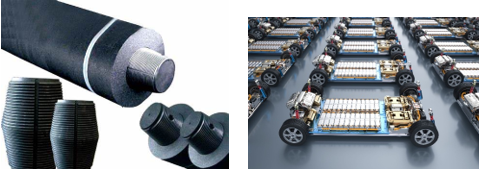
HEG Limited is an Indian company that makes graphite electrodes, which are used in Electric Arc Furnaces (EAFs) to melt scrap metal into new steel, mostly for the steel industry. These electrodes are like big sticks that conduct electricity to create heat for melting metal. HEG is based in Madhya Pradesh and has a factory that can now make 100,000 tons of electrodes each year, up from 80,000 tons earlier. They also produce needle coke, a raw material for electrodes, and are building a new plant to make graphite anodes for electric vehicle (EV) batteries, which will be ready by April 2027. Basically, HEG helps steelmakers and is now moving into EV battery materials to grow further.
Production Process
What’s Happening?
- HEG Limited did not fully buy Bhilwara Energy Limited but increased its stake in the company over time. HEG initially held a 29.48% stake in Bhilwara Energy. On April 2, 2019, HEG agreed to acquire an additional 19.52% stake from RSWM Limited and other shareholders for ₹162.05 crore, raising its total stake to 49%.
- HEG Limited is splitting into two companies to focus on different businesses.
- The graphite electrode business will become a new company called HEG Graphite Limited.
- HEG Limited will be renamed HEG Greentech and focus on green energy (like hydro, wind, and battery materials).
To separate the graphite business (which makes electrodes for steel) from the green energy business.
- Each company can focus on its own goals and grow better independently.
- Graphite and green energy have different risks and needs, so splitting helps manage them better.
What Each Company Will Do:
- HEG Graphite Limited:
- Focus on making graphite electrodes (used in steel production).
- Will keep HEG’s current graphite plant in Mandi deep, Madhya Pradesh (capacity: 100,000 tonnes/year).
- Graphite business made 94.41% of HEG’s revenue (₹2,394.90 crore) in FY24.
- HEG Greentech:
- Focus on green energy projects (hydro, wind, energy storage, lithium-ion battery anodes, plastic recycling).
- Will use Bhilwara Energy’s assets, including ₹300 crore cash and ₹125 crore yearly profit.
- Plans green energy projects worth ₹3,000-3,500 crore, expected to start by 2026.
Industry Size :-
- The global graphite electrode industry (excluding China and Russia) had a capacity of around 3.5 million tons before the 2024–2025 cuts, now reduced to about 2.9 million tons after the 633,000-ton (18%) reduction.
- Valued at approximately $4 billion in 2024 (based on average prices of $3,000–$8,000 per ton), the market is expected to grow to $6 billion by 2030, driven by EAF steelmaking and EV battery demand, with a CAGR of 5–7%.
- The market size in terms of volume was estimated at 1.61 thousand kilotons in 2024, expected to grow to 1.92 thousand kilotons by 2029 at a CAGR of 3.55%.
- UHP electrodes dominate, holding around 65% of the market in 2024 due to their superior performance in high-intensity applications like EAF steelmaking
- Industry sources indicate >100 million tons of EAF capacity addition (ex-China) in coming years, which will drive incremental demand for graphite electrodes by >2 lakh tons vs the current industry size of ~6.3 lakh tons.
Indian Industry Size:-
India’s share, led by HEG and Graphite India, is about 25% of the non-China market, worth around $1 billion. The broader graphite market, including anodes for batteries, is projected to reach $25 billion by 2030, offering HEG a new growth area as it diversifies beyond electrodes for steel.
Competitors:-
HEG faces competition both in India and globally in the graphite electrode market. In India, its main rival is Graphite India Limited, which also produces graphite electrodes and holds a similar market share (around 15–20% globally, ex-China). Globally, HEG competes with companies like Resonac and Tokai Carbon (Japan), GrafTech (USA), and Showa Denko (Japan), though these firms have recently closed plants, reducing competition. Chinese producers dominate 50–60% of global supply but focus on lower-grade electrodes, giving HEG an edge in high-quality ultra-high-power (UHP) electrodes for EAF steelmaking. Emerging players in the battery anode space, like Epsilon Advanced Materials in India, may also compete as HEG enters the EV battery market, but HEG’s established position in electrodes gives it a strong foothold.
Growth Drivers :-
HEG’s growth is driven by several factors.
HEG ’s capacity utilization is at 80%, compared to the industry average 50–55% capacity utilisation.
First, the global shift to EAF steelmaking, which uses graphite electrodes, is growing, with 100 million tons of new EAF capacity expected, needing 52,500–80,000 tons of electrodes—HEG, with its 100,000-ton capacity, can capture this demand.
India’s steel production, which is 28% EAF-based (29 million metric tons in 2022), is set to grow under the National Steel Policy 2017, aiming for 35–40% EAF production by 2030, increasing graphite electrode demand—HEG
The government’s push for infrastructure, with ₹11.11 lakh crore allocated in the 2024–2025 Union Budget, fuels steel demand for projects like highways and railways, indirectly boosting electrode sales.
India’s EV market, growing at a 45% CAGR (projected to reach 10 million annual sales by 2030 per NITI Aayog), drives demand for graphite anodes, supporting HEG’s ₹1,850 crore anode plant (set for April 2027).
Second, the recent 18% global supply cut (633,000 tons) in 2024–2025, combined with China’s 2023 graphite export controls, is expected to raise electrode prices by mid-2025, boosting HEG’s revenue (similar to the 2017–2018 price surge).
Third, HEG’s new ₹1,850 crore graphite anode plant for EV batteries, set to start by April 2027, taps into the booming EV market, where demand for anodes is rising fast.
Lastly, HEG’s low-cost production (running at 80–85% capacity, higher than competitors) and 15–20% global market share (ex-China) position it to benefit from these trends, especially as steel and EV sectors grow.
Challenges :-
HEG faces several challenges that could impact its performance. Weak steel demand in key markets like India and China in 2024 has kept graphite electrode prices low ($3,000–$8,000 per ton), hurting profitability
HEG’s EBITDA fell from ₹600 crore in FY24 to ₹400 crore in 2024. Rising needle coke prices, a key raw material for electrodes, are squeezing margins, as noted in HEG’s recent updates.
A 10% US tariff on electrodes adds pressure on exports, which make up a big part of HEG’s sales.
Finally, the ₹1,850 crore investment in the anode plant (mostly in FY26) could strain finances if EV demand doesn’t grow as expected or if competition in the battery space intensifies.
Investment Rationale:-
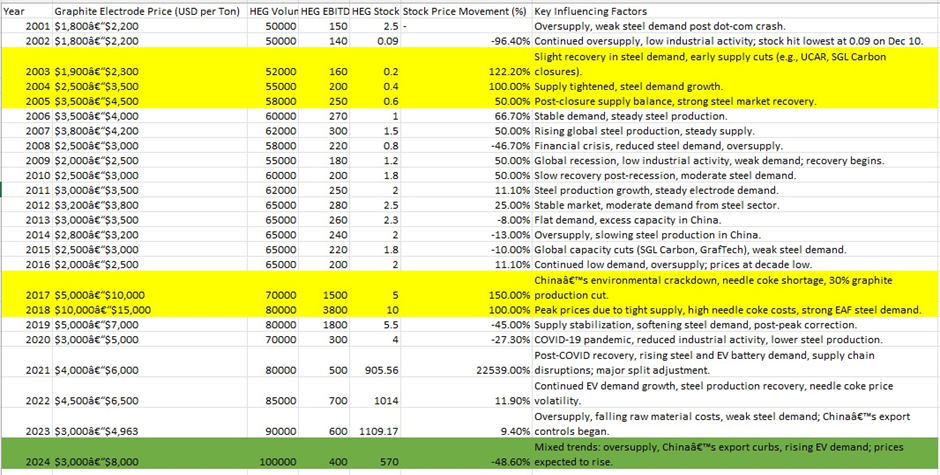
Global supply cuts in graphite electrodes have historically led to significant price increases and stock price rallies for HEG, as highlighted in yellow for past periods (2001–2003 and 2015–2016). In 2001–2003, a 10–15% supply cut (100,000–120,000 tons) resulted in prices rising from $1,800–$2,200 per ton to $3,500–$4,500 by 2005, with HEG’s stock price moving from ₹0.09 in 2002 to ₹0.60 in 2005 (+566.7% over three years). Similarly, in 2015–2016, a 15–20% cut (150,000–200,000 tons) saw prices surge from $2,000–$3,000 per ton to $10,000–$15,000 by 2018, driving HEG’s stock from ₹2.00 in 2016 to ₹10.00 in 2018 (+400% over two years), as shown in the second image of price movements. Currently, in 2024–2025 (highlighted in green), an 18% global capacity cut (633,000 tons) has been announced, with prices at $3,000–$8,000 per ton (US: $3,252; China: $2,863) and expected to rise by mid-2025. HEG’s stock has already rallied 44% in 2024, reaching ₹570, but dropped 48.6% from ₹1,109.17 in 2023 due to weak steel demand and oversupply. Historically, supply cuts have tightened the market, boosting HEG’s profitability (e.g., EBITDA jumped from ₹200 crore in 2016 to ₹3,800 crore in 2018) and stock performance, suggesting potential for a similar move if prices recover as expected.
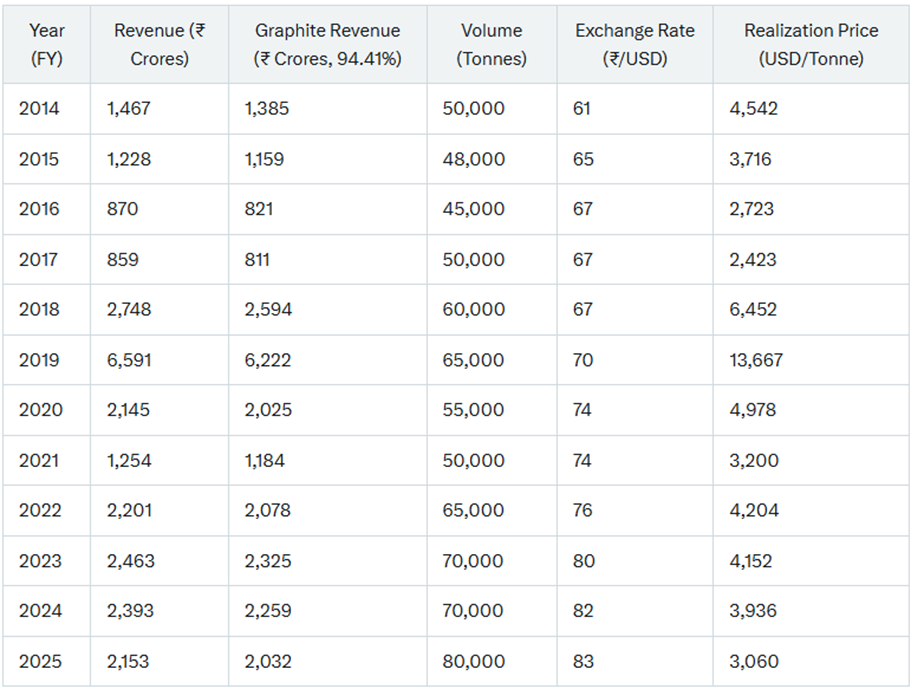
We can see that the realization prices started to rise in 2018, reaching $6,452 per tonne, which was approximately a 300% increase from $2,423 per tonne in 2017. Moreover, in 2019, the price rose to $13,667 per tonne from $6,452, roughly five times the $2,423 per tonne in 2017. This period coincided with the global supply cuts announced earlier.
Can HEG replicate Its Past Moves?
HEG has a strong chance to replicate its past performance following the 2024–2025 global supply cuts, given historical patterns.
In 2001–2003 and 2015–2016, supply cuts led to price surges (e.g., $2,000 to $15,000 per ton in 2016–2018) and stock rallies (e.g., +400% in 2016–2018), with HEG’s EBITDA soaring (₹200 crore to ₹3,800 crore).
The current 18% supply cut, combined with expected price recovery by mid-2025 and growing EAF steel demand, sets a similar stage, potentially pushing prices to $5,000–$10,000 per tonne.
Growth drivers like the EV anode plant and HEG’s cost advantage support this outlook.
However, challenges like weak steel demand, needle coke costs, and tariffs pose risks, as seen in the 48.6% stock drop in 2024.
If HEG navigates these hurdles and capitalizes on the supply cut, it could deliver a strong rally, though not as dramatic as 2017–2018 due to current market headwinds. Investors should monitor steel demand recovery and price trends in the next 1–2 quarters for confirmation.